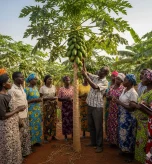
1. A living classroom for farmers: Invetta Model Farm can become a place where smallholder farmers don’t just hear about new techniques, but actually see and practice them – turning dry, tired soils into fertile, productive land.
2. Cutting costs, boosting family income: By learning how to make compost, mulch, and rotate crops, farmers reduce the burden of buying expensive fertilizers and pesticides, leaving more money for school fees, healthcare, and household needs.
3. Building resilience against climate shocks: With unpredictable rains and frequent droughts in Kalungu, regenerative methods at Invetta can show farmers how to protect their crops and soils so families don’t lose entire harvests to the weather.
4. Creating hope and opportunity: By diversifying crops and linking to better markets, the model farm helps farmers earn from multiple sources, giving them confidence and stability for the future.
5. Strengthening community spirit: Farmer field days at Invetta can bring neighbours together to learn, share, and support each other especially empowering women and young people to take leadership roles.
6. Restoring the land for the next generation: Beyond food and income, Invetta can show that farming doesn’t have to destroy the soil or water it can heal the environment so children inherit healthier land.
7. A spark for a wider change: By starting at one farm, regenerative agriculture can spread from household to household, making Kalungu a model district for sustainable farming in Uganda.